Collegiate Shag
The Collegiate Shag (or "Shag") is a partner dance done primarily
to upper tempo jazz music (usually 200+ beats per minute). It belongs
to the Swing family of American dances that arose in the 1920s, 30s,
and 40s.
Today the term "Collegiate Shag" is most often used in reference to a
kind of double shag that is believed to have originated in New York
during the 1930s. To call the dance "collegiate shag" was not as
common during the swing era as it is today, but when it was used, it
was meant to indicate the style of the dance that was popular
mongst the ‘college crowd’. It helped to distinguish the dance from other
contemporary dances that share the "shag" title.
Shag has no clear historical record but is often assumed, as with many other swing dances, to have
evolved from Foxtrot. In the late 19th century the term "shagger" was a nickname for vaudeville
performers, who were known to dance the Flea Hop, which consisted of a step-hop that alternated right
to left, and it is very possible that Shag came from that. Later "Shag" became a blanket term that
signified a broad range of jitterbugging (swing dancing).
The shag can be categorised into three rhythmic categories: single, double, and triple shag. The different
names are intended to denote the number of 'slow' (e.g., step, hop) steps performed during each basic.
The term shag has come to mean various different things just as the term Jitterbug has. The term
Collegiate was simply term used to describe who, or the way a dance was done. For instance Collegiate
Waltz simply meant the kids from the colleges would dance their own style. They didn’t belong to a
ballroom dance school and were thought to be rebellious.
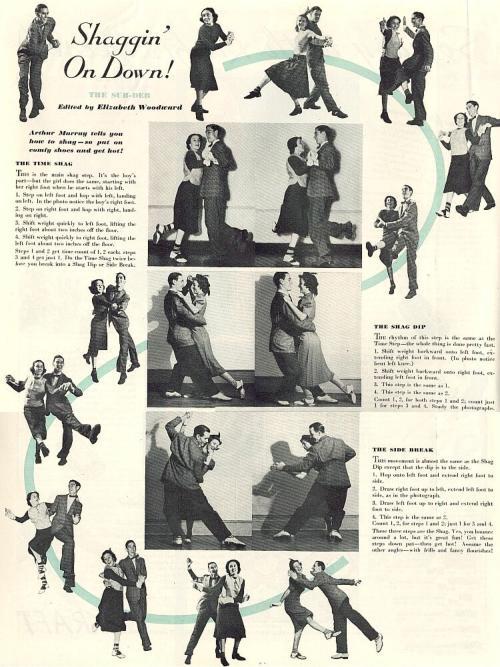
You will be taught a simple 6 count double rhythm basic, with hops and kicks. This style is a close
position dance with some cool opening and separating moves danced to medium to fast tempo.
Resources